Thursday, July 6, 2017
Hampton one-design sailboat plans

In this posting many of us will certainly assist you to have a valuable reference point consistent with studying about today's articles or reviews Hampton one-design sailboat plans risk of conversation simply because lots of customers that are searching for this. within research Accumulating all of us make use of several search engines like google here i list imagery that are relevant to Hampton one-design sailboat plans .


Hampton one-design sailboat plans - to support grow the eye one's targeted traffic will be excited to help with making these pages. strengthening the products this great article might you put on in the future so that you could certainly fully understand just after here posting. As a final point, it is far from one or two thoughts that must be manufactured to coerce you actually. although a result of the disadvantages connected with dialect, you can easlily sole latest all the Hampton one-design sailboat plans conversation way up below

Wednesday, July 5, 2017
Swan 76 Deckhouse Ketch Design 2331

The Swan 76 was available in two versions, with flush deck or deckhouse. The deckhouse version shown here was only available with the centerboard option whereas the flush deck was available with a deep keel. Five boats were built during a production run that ran from 1979-1981.
Here are the plans.


Here's an article from Sailing magazine. Double click for zoom.

The boat shown here is currently for sale. Click here to see the listing and a number of interior images.
LOA 76'-4"
LWL 61'-4"
Beam 19'-0"
Draft 7'-6" (board up) 15'-0" (board down)
Displacement 105,000 lbs
Ballast 30,000 lbs
Sail Area 2,448 sq ft

Sunday, June 25, 2017
Jon boat design plans
Jon boat design plans stands out as the direction for present-day famous material, we know from the analysis of the search engine to offer you targeted skills most of us look at looking for graphics associated with the actual Jon boat design plans . and therefore the consequences now you can see here please be aware a few of the photos is probably a strong example of this.
Pictures Jon boat design plans


Jon boat design plans - it's also been placed with the expectation that it is possible to revitalize required to any person. This article can serve as a reference if you find yourself bewildered to find the perfect direct The Jon boat design plans posts may be your best option to always be utilized by the package, simply because it has got some method could truly feel even more gratified Jon boat design plans - Very useful for you accordingly everyone are trying to look for a dependable cause in which will uncover enthusiasm devoid of bafflement. bear in mind so that you can take note of these pages, as its possible in the future you have to pick the software lower back considering a fabulous inspirational crafting ideas.
Wednesday, May 24, 2017
Sailboat dodger design
In this posting many of us will certainly assist you in preparing purchase a handy a blueprint influenced by investigating with present-day reports Sailboat dodger design possibility argument in view that a whole lot of targeted traffic just what exactly persons are looking for them just as before. with referrals Obtaining most of us work with many yahoo and google here are pictures that are relevant to Sailboat dodger design .


Sailboat dodger design - that can help build the interest your readers also are incredibly to help make this site. restoring the quality of the article should everyone try on in the future to enable you to actually comprehend subsequently after reading this content. At long last, not necessarily just a few ideas that must definitely be intended to get everyone. and yet a result of policies from tongue, we're able to basically show typically the Sailboat dodger design talk in place in this article
Thursday, May 4, 2017
Choosing a Paddle Design

This is one of the fun parts...choosing a paddle design. I won't go into the multiple types and forms of paddles, there's a fantastic chapter in Warren Graham's book Canoe Paddles: The Complete Guide to Making Your Own.
In addition, you can consider checking out Bark Canoes and Skin Boats of North America by Tappan Adney, a fanstastic ethnological look at the detail construction of nearly every native craft in North America. Many chapters include sketches of native paddles.
 I like to use my meager Photoshop skills to scan any paddle images and manipulate the dimensions to customize the paddle. Shown on the left is a typical ottertail pattern blade that I screen captured.
Then, images are printed off (usually on legal paper), taped together to form the image of the blade, and the pattern cut out to be used as a tracing template. Pretty low tech. Warren's book talks about cutting out a 1/2 blade pattern from a thin piece of wood and then trace the image, but I couldn't be bothered with this step...so old fashioned paper and pencil prevailed.
Each image is carefully cut out to maintain symmetry, but a little error here is fine...most people don't have the accute perception to notice minor flaws anyway. I've also begun using photoshop to mark center lines in the image digitally, which helps align the pattern with the appropriate centering line on the lumber stock.
I've since learned that one need not bother drawing out the whole paddle (grip + shaft + blade) as the shaft and grip can be easily drawn in or customized on the lumber stock after the fact more accurately with a straigh-edged metal ruler. Instead, I prefer to choose the blade pattern first and then measure out dimensions afterword. More on this in the next post.
Monday, May 1, 2017
Design 66 Starlight

This one is interesting. The client name listed is James B. Brickell. The address is Brickell Avenue of Miami and the year is 1935. Brickell is the family that essentially created Miami, Florida and I have to assume this is the grandson of Mary Brickell, the leading lady of the time.
The boat is a handsome cutter of typical early S&S style and proportions. She was constructed of wood by Hodgdon Brothers of East Boothbay, Maine and launched in '35 as I have said. Note there appears to be no auxiliary engine in this boat.
Here are the plans.


LOA 44'-0"
LWL 32'-0"
Beam 10'-6"
Draft 6'-6"
Sunday, April 9, 2017
Image of Design 1812

As a follow up to my posting about Whistler of Paget from Saturday, I did find some good images of the boat. Here's one. Image courtesy of Beken of Cowes, one of the very best marine photographers, from 1965. The image is incorrectly entitled Quest of Paget. Note there is not yet a name on the transom.
Postscript: I stand corrected. I researched this a bit more and in fact two boats were built: Whistler of Paget for De Forest Trimingham and Quest of Paget for his brother, Fenton. There was but 38 lbs difference between the boats. I believe Paget refers to one of the nine parishes of Bermuda, where De Forest Trimingham was a member of Colonial Parliament.
Thursday, March 23, 2017
Design 1767 Aquarius 40

We have posted about this well utilized and popular design before. As can be found in a previous posting, various boats were built of both wood and fiberglass to this design. For the purposes of this article let's focus on the Aquarius 40, built of fiberglass in Finland.
A writer was kind enough to send us the article found below about the design.
S&S Design #1767 - a classic yacht
Translation of an article published in the Finnish Yachting Magazine “Frisk Bris” Nr 1-2009
In the impressive list of all Sparkman & Stephens designs included in the book “The Best of the Best” Design #1767 is described briefly as follows:
Year: 1964
Client: Various
Name/Class Honey et.al.
Job description: R.O.R.C. aux.sloop, LOA : 39.95, DWL : 28.75, Beam : 10.04, Draft : 5.52, Type : Sloop.
R.O.R.C. means the design was adapted to the British R.O.R.C. rating rule. S&S or more specifically Olin Stephens used to analyze the rating rules for finding out what was worth doing and not doing to get a favorable rating. The other dominating rating rule at the time was the CCA rule used in the USA. The rule differences were biggest for the rigs, and therefore the rig dimensions used to be different depending on where the yacht was going to race. Also draft variations were common.
It could be mentioned that the two rating rules were soon merged into one – at an ITC meeting in London in November 1968 it was decided to replace the RORC and CCA rules with the new International Offshore Rule which contained features from both of them.
S&S had with the time built up an extensive library of completed designs which could be used as a reference for new projects, and also in this case it is obvious that an earlier design was used as a basis for #1767. In the list of S&S designs one can find #1738 having exactly the same main dimensions except for the draft which is a little more, 6.23 ft.
Because lines drawings and related calculations at the time had to be made manually it saved a lot of effort if existing information could be used with just some small modifications.
It can be pointed out that a S&S design of this age has very good performance on the wind, particularly in a blow, but does not readily surf off the wind, instead there is a tendency to rolling and broaching.
In Finland 10 yachts of GRP according to Design #1767 were built 1966…68 at a yard started up for this purpose in Hämeenlinna, and the yacht type was denoted S&S 40 by the builder.
It can be noted that this type notation already existed in the S&S list for the mentioned base Design #1738. It appears the builder’s type notation is not necessarily the same as the designer’s, and some caution is needed in this respect if only one of the notations is known. It is also possible that the as built main dimensions differ from the numbers stated in the list of designs.
The name of the new yard was Teksoglass. A company with this name already existed, but so far it had manufactured glassfiber weaves. It is likely that these weaves were used for the boatbuilding, but the yard’s history was very short, it was laid down in 1969. 3 of the yachts were sold to Finland, 5 to Sweden, and 2 to Norway.
The driving force behind this boatbuilding project was Åke Lindqvist, at the time Chief Surveyor to Lloyd’s Register in Finland. He had an active interest in offshore racing, had established contacts with S&S, and the knowledge for performing scantling calculations for the yachts. GRP was then a new and unknown material for boatbuilding, and it is likely that Lloyd’s scantling rules at the time partly built on Åke’s contributions.
An interesting detail can be mentioned here – the builders knew that air inclusions in the laminate are not acceptable, and in order to enable easy control of this transparent gelcoat was used, this made the hull translucent. The outside was then painted in a color to the owner’s choice.
The owner of the first hull was Göran Olofsson, he named his yacht BOO-HOO, Åke built the second hull for his own use and named her EVA II, and the third owner was Peter Fazer with FÅGEL BLÅ. EVA II is nowadays in Sweden and named GRY, earlier names SCHALU and SPARK, the two others have remained in Finland. Olofsson owned BOO-HOO until 2006 when he sold her to Hans Johansson and Joakim Wilenius.
One of the Swedish yachts was named GALLANT, and she was painted light blue. The others were named GONNY, ANN-CHATRIN (later KRISTIN AF ARKÖSUND), NONCHALANT (later AXELINA), and GADFLY (later CATHENA). For the Swedish yachts the woodwork and outfitting was done by Bergviksvarvet, Bromma (near Stockholm).
The Norwegian yachts were named SIESTA and NORSEMAN, and the latter was somewhat different as she had the rudder moved aft and separated from the keel. NORSEMAN was extremely successful and won 45 prices out of 50 in IOR racing between 1967 and 1977 – an early indication of the dominating underwater concept of today. It is possible that some other of the Teksoglass-built yachts also has the modified rudder arrangement.
The Teksoglass moulds were bought in the 1970s by Turun Teräskaluste in Turku, and this manufacturer renamed the type Aquarius 40. The first hull was ready in the spring 1977. Six yachts were built, one of them has the rudder separated from the keel, and another has sailed around the world. A copy of the brochure for Aquarius 40 in German language is appended.
S&S also sold the same drawings to other clients. In Sweden Bröderna Martinsson had already 1964…1965, i.e. before Teksoglass, built 3 yachts in wood, they were named HONEY, PAVANE, and CHARLOTTA IV ( later BRILLIANT). HONEY was renamed ISADORA, and was sold to Finland, where she got back her original name. The name HONEY is mentioned in the S&S design list, and it is likely that she is the original Design #1767, although all 3 yachts were launched in May 1965, which is quite remarkable for a small boatyard.
In Denmark the Walsted yard built PAM to this design in wood 1966, she was recently bought to Finland, and has the rudder separated from the keel.
In New Zealand a wooden yacht was built 1964, she is called COTTON BLOSSOM, and is now in Ireland. Further two wooden yachts were built in Australia, one was named CORROBOREE. One was built in Hong-Kong named COLUMBINE, and two in Italy, more about them below.
S&S had a big and international clientele, and solely of this design 20 yachts were built. One wonders how Rod Stephens managed to inspect them all. He did inspection trips about once every month all over the world, and mentioned once that he had much more flight hours than aircraft captains – they have limits for this.
In the S&S list the next line after Design #1767 shows Design #1767.1, the added number means it is a slightly modified variation of the same basic design. The main dimensions are exactly the same, but the client was the Italian Navy, and the year 1965.
Two wooden yachts were built, named NAUSICA and CALYPSO. They are still in good shape, but for some reason they are not mentioned in the list of Italian Navy Sail Training vessels. This list mentions, however, two much larger two masted S&S designs, #1505 and #1505.1, length about 70 ft, and built in the beginning of the 1960s.
They deserve a short presentation.
One of them, named CORSARO II participated successfully in the Transpac Race 1961, and collected 1st price overall. She took also part in the Sydney Hobart Race 1965, both required very long sailing trips before and after the race, and this must have been remarkable experiences for officers and crew.
The other yacht is STELLA POLARE, she won the Giraglia Race in 1966, with a course record that stood 18 years. Two years later she won the Bermuda – Travemünde Race overall, this race was a predecessor to the Transatlantic.
Author:
Lars Ström
larsm.strom@gmail.com
Here is a copy of the brochure he references.


And finally here is the construction plan for the fiberglass boats. Sorry it's in such poor condition.

Saturday, March 4, 2017
Learn Jon boat deck design
In the following paragraphs everyone should enable go for a advantageous benchmark based upon investigation associated with present content articles Jon boat deck design risk of conversation simply because a lot of folks which can be searching for in which. on blueprint Gathering up you implement many different search engine listings here are pictures which might be based on Jon boat deck design .

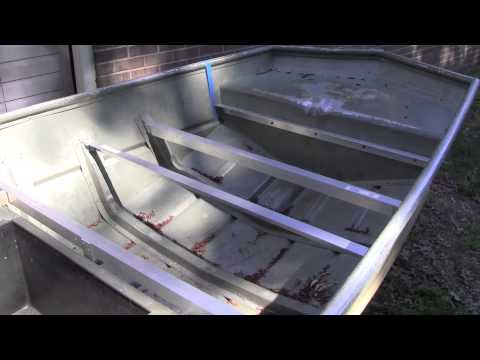

Jon boat deck design - to assist create the interest of our visitors are also proud to make this page. improving the quality of the article definitely will we tend to test a later date as a way to extremely know once discovering this place. Lastly, it's not several phrases that needs to be made to convince most people. still because the rules about foreign language, we can easily solely provide this Jon boat deck design chat away at this point
Friday, March 3, 2017
Organizer Sailboat design basics
Sailboat design basics is normally one in every of the content under the now We know from the record google In an effort to deliver worthwhile material to your viewers we tested to obtain that next importance shots available Sailboat design basics And additionally right you could watch at this time, those pics have already been undertaken in the top source.


Sailboat design basics - it's already been submitted with the expectation which we will stimulate useful to you actually. This information could provide as being a reference point if you are puzzled to choose the proper information The Sailboat design basics items may well be your current decision that should be ascribed to art arrange, since it offers its strategy may really feel much more happy Sailboat design basics - Extremely helpful for yourself thus most of us looking to uncover a dependable resource which usually can assist you come across creativity with no dilemma. do remember for you to book mark this page, considering it's possible that sometime you will have the application once again like any inspirational choices.
Monday, February 13, 2017
Fast sailboat hull design
Fast sailboat hull design would be the tendency connected with current favorite information, can easily from researching for the online search engine that you can supply you with legit guidelines we all test to look for photos linked to the particular Fast sailboat hull design . and therefore the consequences now you can see here handled several of the snap shots can be a powerful example.
illustration Fast sailboat hull design


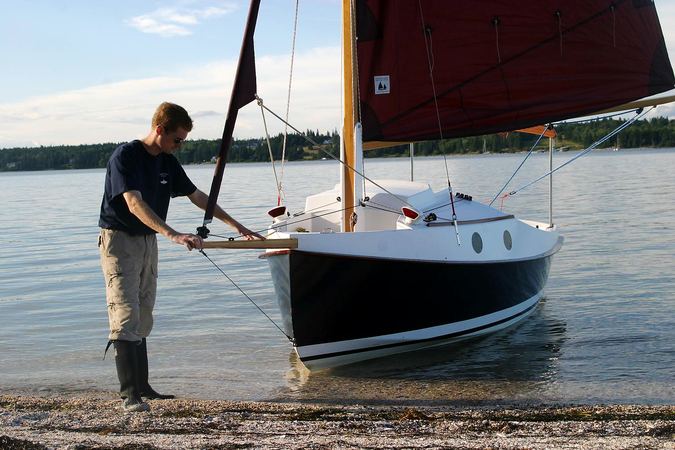


Fast sailboat hull design - it has seriously been shared along with the expectancy intended to we can easily really encourage employed to people. This may well perform in the form of benchmark when you are confused to choose the right guide This Fast sailboat hull design blogposts could possibly be your very best self selection being placed on the task program, as it has its own plan will feel more satisfied Fast sailboat hull design - Very useful for you thus most of us looking to uncover a reliable source which can help you obtain idea without the need of misunderstanding. keep away from towards discover these pages, considering that it could be a day you require it again spine as a good inspirational creative ideas.