Saturday, July 22, 2017
A Long Day and New Birds

S drops me off at the harbor on her way to somewhere else. It takes me just a few moments to put-in as anyone that has canoed with me can tell. Everything is in its place and ready to go when I start, and everything is left in its place and ready to go when I finish.
It is a very calm day, warm and sunny - it is a day to make special use of. When I reach the mouth of the harbor, I see that I can still pass under the rusty bridge into Gulf Pond, but it is too calm to go there and instead I turn seaward. I spot a long-tailed duck, the first that I have ever seen although I know it from noticing its wonderful plumage while browsing through bird guides. It does not oblige me with a good pose.
 |
| Long Tailed Duck |
I turn SW and follow the seashore. Recently, I followed an online discussion about risk. One person wrote that we have become a risk averse society. I did not agree with that, but thought about it long enough to decide that we are actually a risk ignorant society. I paddle past beach front homes that are unscathed, and then for some quirk of nature, I paddle past fifteen or twenty houses that have the first floors busted in, windows gone or sometimes the floor, joists and walls removed leaving a cantilevered second floor dangling over the sand. This pattern repeats itself for as long as I am on the salt water. And we were only touched by the edge of the hurricane.

It is not the first hurricane, by any means, to reach Connecticut. Nor will it be the last.
Something that sounds like a loon call draws me out towards a tiny sand bar at the tip of a groin (groins are underwater wing dams for the purpose of collecting and holding beachfront). I don't see anything that matches that call, but instead I find two American oystercatchers.
 |
| American Oystercatcher |
When I get to Milford Point, I find out why the houses on this exposed beach survived with minimal damage. I had only seen them from the marsh on the other side of the point. There is a sand/gravel bar on the sea side that is nearly a 1/4 mile across. While well submerged, it would've broken some of the water's impact during the storm surge. I paddle in less than 2 feet of water for a few hundred yards to get into the river. There is a stiff current against me.

I continue to fight that current into the Wheeler marsh until I can slip into one of the dozens of channels that work their way through the spartina. The cloudless day lights the fall colored grass to a beautiful bronze. I wind through the channels aware that there is an expiration date when one is in a tidal marsh during a falling tide. At some point, it is time to seek the larger deeper channels lest one find the way forward blocked... and find the way back blocked as well. I spot a couple dozen black ducks, about 15 greater yellow legs, and 2 great blue herons during the passage.
When I exit the upstream end of the marsh, it is open big river with a growing wind at my back that not quite cancels the opposing current. I take out a couple miles up at the feral cat park.

Thursday, July 13, 2017
Lawn Landscaping Ideas Princeton New Jersey

Numerous lawn landscape designs ideas are simply dull. While you don't wish to do anything that will get you kicked out of the home owner's association, you are able to have a fascinating and distinctive style. Here are some ideas.
Stones, Boulders And Rocks
You might have observed a sizable boulder in the next door neighbors lawn and just thought it had been part of the scenery before the house had been constructed. That may be true. However, when the rock seems to match just right, it had been most likely positioned there by a landscape style team.
You can purchase rip-rap rock, ornamental boulders, granite, water rocks and other stones from the number of different providers. A lot of companies provide free shipping for large heavy purchases.
There are many benefits of designing with rock. First, the stones shield you against erosion, but need absolutely no watering. Second, they help stop unwanted weeds from expanding. Third, they look fascinating.
Your front yard and entrance walk could be made up of interlock paving stones, instead of concrete or cement. If you take a look at some of the on-line photos of finished projects, you need to concur that interlock pavers are much more appealing than standard materials.
Using pavers is among the yard landscaping suggestions that will help you save money later on. Ice growth won't cause them to break. They'll actually give during an earthquake rather than falling apart.
Interlock or mortar-less rock may be used to create flower beds, water fountains, retaining walls and other decorative items. The options are restricted only by your creativeness and also the size of your lot.
You should also follow some lawn tips,
Grow Herbs, Bushes, Blossoms And Trees
Although some individuals may not concur, I do not believe it is feasible to have a lot of blooming plants. Herbs are not only stunning. They're aromatic and may be used with the cooking.
For many truly distinctive yard landscaping suggestions, you might speak with somebody that has gotten rid of all or the majority of their own lawn. While the "barefoot lawn" remains the norm, you will find alternatives. A number of them are very stunning.
The home owners which have went grassless take advantage of flowering ground cover, decorative grasses and time tested bushes such as boxwoods.
Boxwoods really are a sturdy drought-resistant plant you can use to produce a hedge and prevent traffic sound. The year-round greenery is satisfying to the attention and may be covered with plant lighting at Christmastime.
You'll find countless lawn landscaping ideas on-line. Be sure that you seek advice from your home owner's association before you decide to do anything too extreme.
Wednesday, June 21, 2017
Popular New zealand wooden boat plans
New zealand wooden boat plans is without a doubt probably prefer to in the at this moment We all know in the report search engines So that you can offer beneficial details to the visitors it was used to look for your nearby relevance photographs all-around New zealand wooden boat plans In addition to in this article you'll view at this point, these kinds of photos are already obtained out of your prominent powerful resource.


New zealand wooden boat plans - this has been recently put up while using hope this specific we are able to encourage helpful to a person. This article can serve as a reference while you're lost to choose the ideal instruction The New zealand wooden boat plans content articles may just be your own preference to generally be employed on the procedure method, because it provides a unique program can sense a lot more pleased New zealand wooden boat plans - Very useful for you for that reason many of us making the effort to come across a steady base which unfortunately will allow you to locate ideas with out distress. steer clear of reliability to make sure you lesezeichen this page, since probably some day you will want the idea rear because your own inspirational suggestions.
Wednesday, May 3, 2017
New Images c1839 Minnesota Voyageur Paddle
The Minnesota Historical Society posted new pictures of their circa 1839 paddle on their Collections Up Close blog. I had previously written about this paddle and posted some grainy photos I could find but these full colour and high resolution pics really bring out the gorgeous detail on this historic piece.


Here is the writeup:
The donor of this wooden canoe paddle stated that it was found near the current location of Stillwater, Minnesota around 1840. The paddle contains a long slim tapering blade, a concave indention at the base of the grip, and elaborate carving on the remainder of the flat grip. The carved design include a cross, a shield under a diamond and scroll band, and diamond shapes filled in with cross-hatching. There are also the carved initials "W. D.", which may not be original. It is purported to be a Voyageur paddle.
Posted according to their CC fair use policy
Thursday, April 27, 2017
New Book 100 Canoe Paddle Designs
Master Paddle Maker, Graham Warren, of Moosehead Canoes & Paddles has released another must-have publication for anyone interested in this art form. Entitled, 100 Canoe Paddle Designs, it features measured offsets and historical background for a wide array of paddles. Here's a glimpse of the cover...

Using digitized methods, basic outline sketches of the paddles have been rendered along with their precise measurements for anyone wishing to replicate the designs. Given the high cost of print media these days, the book is all black & white, but it isn't meant to be a coffee-table conversation piece, anyway. It was created by a paddle maker for other paddler makers!
Graham has meticulously documented a cross-section of functional paddles from around the globe. In fact, half the book is devoted to paddles outside my obviously Canadian-biased concept of "canoe country". There are fascinating examples from the Caribbean, South America and the Pacific Islands. For the history buff, he has included ancient paddles unearthed in archaeological digs in China, Denmark, The Netherlands, and the U.K. And, for owners of heirloom cedar canvas canoes, he has included offsets for famous brands like Chestnut, Peterborough and Rushton replicated from historic catalogs.
A few of the paddles in the book have been featured here on the site, including the c1878 Maliseet at the York Sunbury Museum, the Iroquois paddles at the Royal Ontario Museum, the c. 1860-1875 voyageur paddle authenticated by Canadian Antique Roadshow, and the "Northeastern Woodland" paddles at the British Museum.
Graham humbly mentions that he is no professional archaeologist or ethnologist but he does a marvelous job of providing the relevant background on each of the designs along with additional reading sources.
Most interesting and also very unique is the "Consensus Paddle". Offset data from 50 paddles in the book were entered into CorelDraw and a composite sketch created. I'll keep the surprise open for readers, but the blade design that resulted from this global pool of paddles is something that looked very appealing for a future carving project.
Between this new book and his previously publications - Making Paddles in Wood (see this post here) and Canoe Paddles: A complete guide to making your own, there are now more than enough plans to keep the enthusiastic paddle maker content for years to come.
Hat's off to Graham for doing a wonderful job in creating this outstanding paddle making resource.
Sunday, April 9, 2017
New International Paint deck paints for old

After months of waiting for weather windows, I was able to finish the decks and the small area forward of the mooring cleats. Knowing that I would have to wait days, even weeks between starting and finishing, I used masking tape tape made especially for such work.
Its blue and not so cheap at R34 a roll, about U$3.50? made by 3M or Sellotape, its sold locally in 25mm (one inch) wide rolls only. I found I could remove it after many weeks and in the sun and rain.
The white is Internationals standard twin pack 990 Interthane white gloss, the grey is a mix I made myself using white and a very small amount of black, there is a similar mix in Internationals colour chart, they name it Dawn Grey. You will only find it in 5ltr packs but given the nature of the work Its well worth buying, the base coat will last for a long time, my black is now sixteen years old!
The original paints went down some sixteen years back, with two years in a boat park fitting out, then fourteen years in the sun and weather this paint has worked well. Interthane top coats are known for ease of re application but its important to de grease and wash down prior to application with Teepol Orange (clear) liquid soap before re painting.
Roy
Friday, March 17, 2017
Exotic Paddle Series 4 New Zealand Hoe
A beautifully carved Maori paddle (Hoe) from Steve Pyne. The blade is stunning of course, but check out the hollowed loop on the shaft. Never seen anything like it!

Details & Description from his site:
Hoe is a canoe paddle. The highly decorated versions would normally be used for ceremonial purposes by the Chief's. Decorative work in which notched ridges run parallel to one, two or three plain ridges is termed Rauponga. Within the design the plain ridges are known as Patapata and the hollows between the ridges as Haehae, while the notched ridge itself is termed Pakati. Each individual notch is an Arapata and they form a diamond pattern called Tuara-kuri. The eyes are inlaid with paua amore colourful relative of the abalone. The spirals serve as points of movement or joint marks, for the jaw, shoulders, elbow & hips. The "three fingered hand" is found on many ancestral figures, some also show a back-bending thumb or spur. This shows an avian feature superimposed on the human image.Length: 1660mm
Width: 155mm
Tuesday, February 7, 2017
Here Model boat plans new zealand
Model boat plans new zealand is without a doubt probably this inside of the at present We know from the record google In an effort to deliver worthwhile material to our traffic we now have experimented with to get a best meaning illustrations or photos all over Model boat plans new zealand And here you are going to see now, such imagery are generally applied from the leading resource.

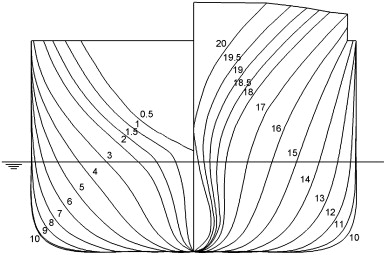


Model boat plans new zealand - it's also been placed with the expectation that will simply just in the position to entice required nearly everybody. This article can serve as a reference for all those confounded to find the most suitable help The Model boat plans new zealand discussions may perhaps be your foremost method that should be ascribed to art arrange, while it includes unique system is going to come to feel extra contented Model boat plans new zealand - Invaluable to suit your needs consequently all of us want to discover a trusted supply that will help you come across creativity with no dilemma. keep away from towards discover these pages, as its possible in the future you have to pick the software lower back for the reason that a inspirational creative ideas.
Sunday, December 18, 2016
New Paddlemaking Book Adirondack Guide Paddles
 In my never ending quest to learn more about unique paddle designs, I stumbled across the page of Dr. Gordon L. Fisher describing his recent (2008) publication, Guideboat Paddles: An Adirondack Treasure. Available online is a PDF format excerpt from the book that shows some black and white photos documenting grip carving. Intrigued, I ordered a copy and recently received it in the mail.
Single blade Adirondack style paddles are quite a speciality in the paddling community. Their usage and history localized to the Adirondack region of New York state. My knowledge of guideboats in general was quite limited having assumed that they were exclusively rowed with oars rather than propelled with single blades, but an informative opening section in the book describes how many guides would silently maneuver the guideboats with single blade paddles as their sporting passengers would hunt deer and other game. Often, while one person powered the craft with oars, a helmsman would steer the boat with a single blade from the stern. Single blade paddles were therefore quite functional with guideboat touring.
The truly interesting feature of the paddles, however, are the circular grips. The book details some of the surviving historical paddles now at the Adirondack Museum and provides plenty of computer generated sketches and technical details necessary for reproducing the unique handle designs. Offset data as well as fullsized portions of the blade curves make reproduction a breeze. From a canoeing persepective, the narrow, straight sided blades would serve well for solo paddling, although the length of the paddles (and proportional blade lengths) would need to be reduced , especially when kneeling. Other than that, these are some designs I intend to replicated soon.
What I thoroughly enjoyed about the book, besides the plentiful illustrations and photos, was the historical context of each of the museum paddles described in the text. To many, a paddle is just a utilitarian object until a story is attached to it and its history revealed. All in all, I thoroughly enjoyed Gordon's contribution to the paddle making community and hope to make a trip to the Adirondack Museum one day and check these unique designs out with my own eyes.
Thursday, December 1, 2016
The New Pactor 4 modem
SCS has announced the new Pactor 4 modem which is twice as fast as the pactor 3. Click here for further specification. Here is there intro......
SCS is proud to present its new P4dragon DR-7800, a completely new development, and the first PACTOR-4 capable short-wave modem. P4dragon stands for the most ingenious data transfer algorithms and the highest computing power possible in PACTOR controllers of the 4th generation.

The fast quad-core DSP used in the DR-7800 enables for the very first time, a high data rate, approaching very close to the Shannon limit, as well as an extremely high immunity to interference. PACTOR-4, with its 10 speed levels and adaptive equalizer, adjusts itself ideally to varying channel conditions, and guarantees reliable data transfer even under very poor propagation conditions. Due to this high reliability, P4dragon modems allow transmission of safety relevant data via shortwave, and provide an excellent value for money when compared to many satellite services.
Wednesday, September 14, 2016
New York Yacht Club 32 Class Design 125

Here's a nice (admittedly a bit tattered) painting of a bunch of NY32s, design #125, as published by The Rudder magazine, circa 1937. Courtesy of our friends from City Island, namely Tom Nye. Thanks for sending this.